QIDAN response to the DFVP and other legislation amendment bill 2025

People with disability, in particular women with psychosocial disability, intellectual disability and cognitive disability, experience DFV at a disproportionately higher rate compared to those who do not have disability. This higher risk of DFV is influenced by many factors, not in the least prejudice and negative stereotyping, the normalisation of disability discrimination, and the lack of accessible and inclusive disability-related systems and services.

While there is a clear link between disability and the increased risk of being a victim-survivor of DFV, there is also a link between disability and accusations of engaging in domestic family violence behaviour. In QIDAN’s experience, disability-related behaviour can sometimes be mistakenly misidentified as DFV. Furthermore, many people with disability who engage in DFV-related behaviour are also victim-survivors of DFV themselves. We acknowledge that DFV-related legislation is incredibly challenging to balance. However, while individual and community safety should be a priority, reform must also be informed by an inclusive human-rights framework and should not be in detriment of the rights of people with disability. We hope that our insights can provide new considerations on how we can work toward a safer Queensland for all.

View PDF (341 KB).
View Word (604 KB).

Related Posts

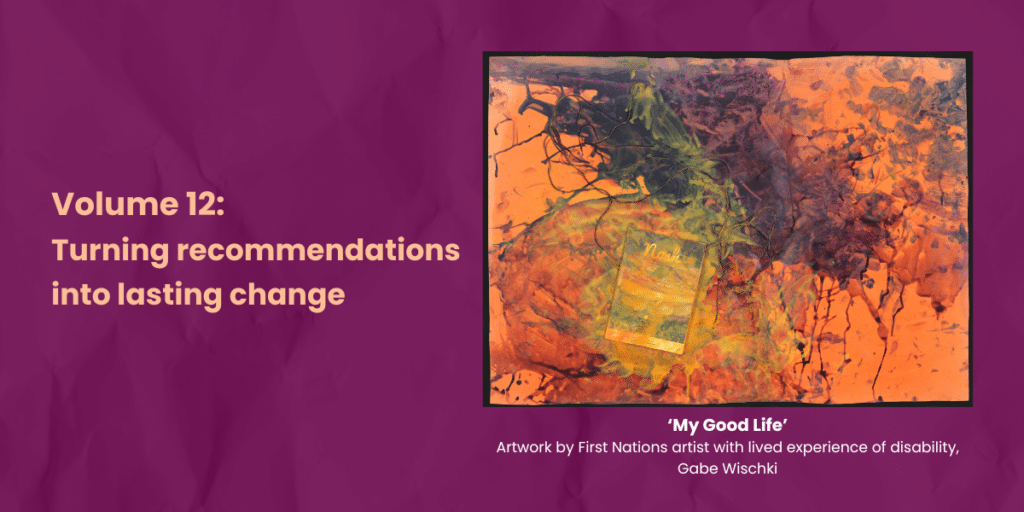
Burgundy background with artwork titled 'My good life' by artist with lived experience of disability, Gabe Wischki. The artwork has been created by rubbing his hands and pushing his fingers through the paint on the canvas.

Volume 12: Turning recommendations into lasting change

Artist Statement “My Good Life” is an acrylic painting on coloured cardboard with string and magazine which is strongly connected

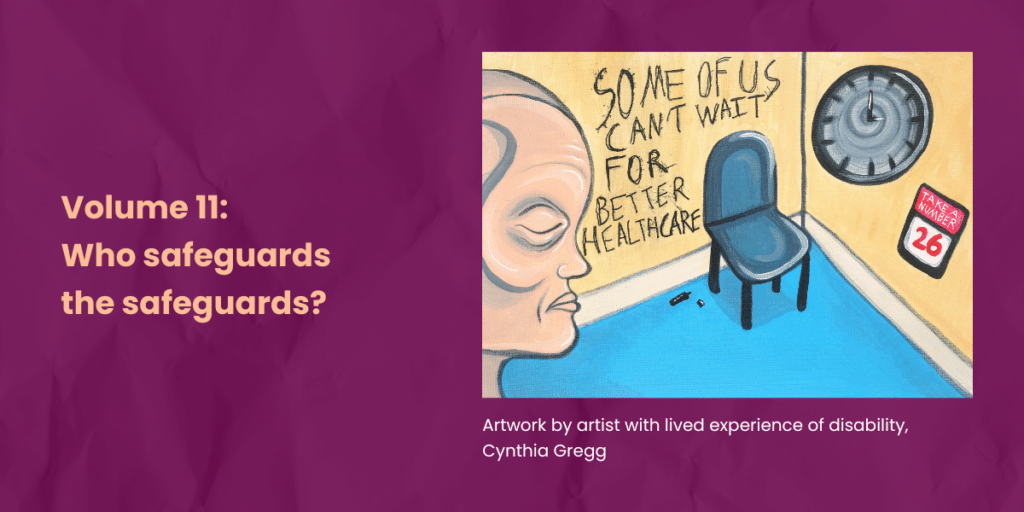
Burgundy background. Artwork by artist with lived experience of disability, Cynthia Gregg containing the face of a person experiencing discomfort in a healthcare waiting room with a chair and a clock on the wall. Text on the wall says Some of us cant wait for better healthcare. banner text says Volume 11: Who safeguards the safeguards?

Volume 11: Who safeguards the safeguards?

Artist Statement “This painting is about the lack of inclusion and support for those with mental health concerns, within the

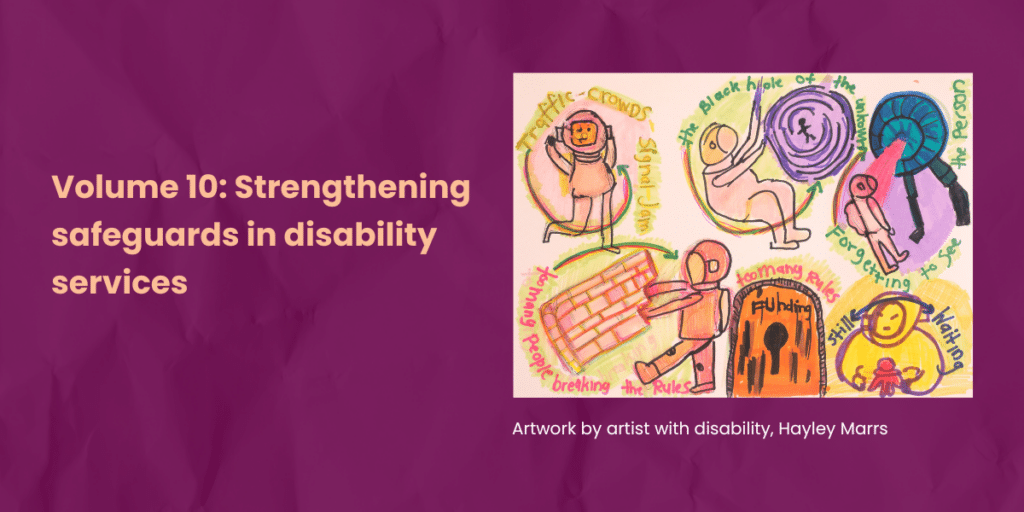
Burgundy background. A pen sketch artwork represents teh challenges a pewrson with disasbility faces navigating disability services with too many rules, chaos, long waits and the unknown. Text says Volume 10: Strengthening safeguards in disability services. Artwork by artist with disability, Hayley Marrs

Volume 10: Strengthening safeguards in disability services

Artist Statement “My artwork represents how the world can be too loud, too bright, and too fast. The black hole

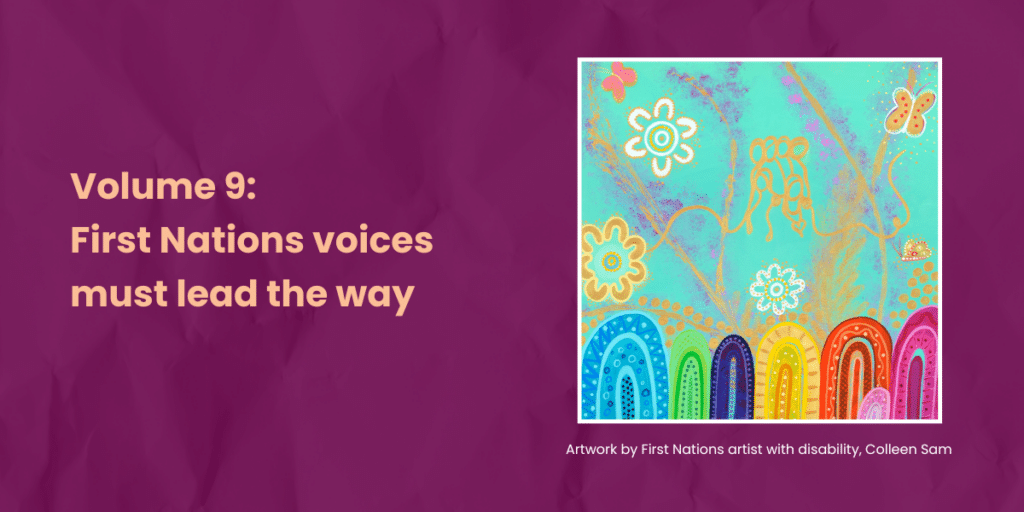
Burgundy background with a first nations artwork titled Spirit of Justice which includes mountains, butterflies and flowers reflecting hope, resilience and strength of community on overcoming life's barriers. Text says Volume 9: First Nations voices must lead the way. Artwork by First Nations artist with disability, Colleen Sam.

Volume 9: First nations voices must lead the way

Artist Statement Spirit of Justice The bright vibrant colours depicted in the artwork represents the bright and hopeful future for

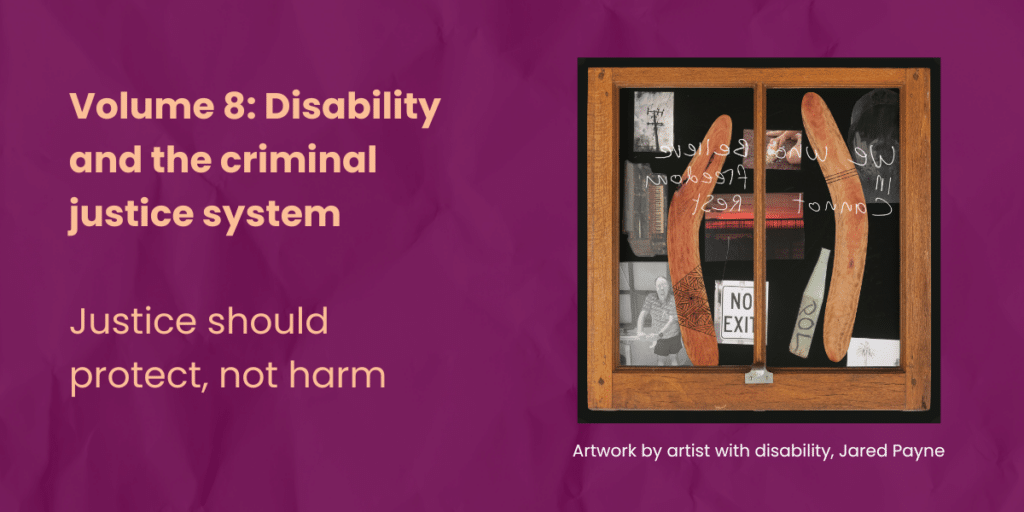
Burgundy background. A glass window with a wooden frame containing two boomerangs and a few photos in it. Text says Volume 8: Disability and criminal justice system. Justice should protect, not harm. Artwork by artist with disability, jared Payne

Volume 8: Our justice system should protect, not harm

Artist Statement: My name is Jared Payne, I am a Barkindji Man from far west New South Wales. The central

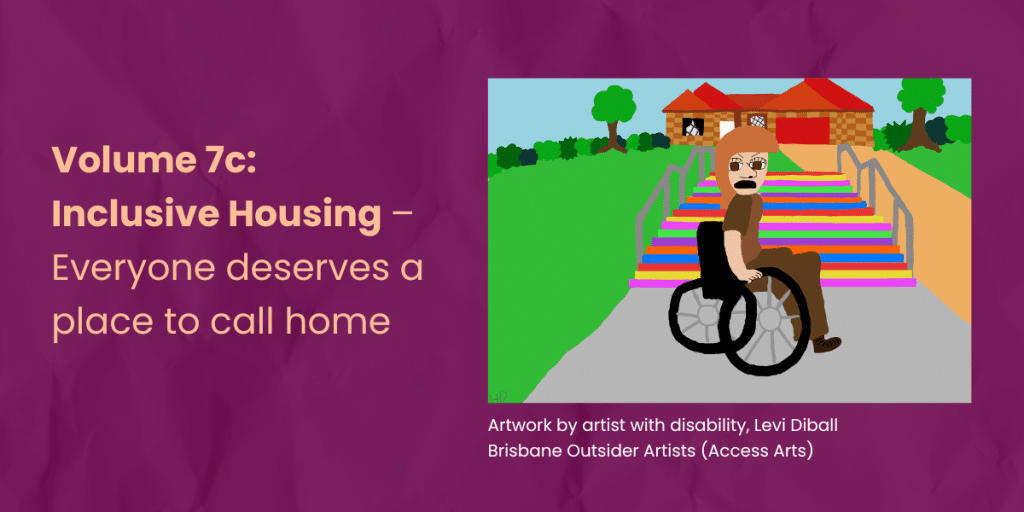
Volume 7c: Inclusive Housing – Everyone deserves a place to call home

The Artwork Levi Diball’s artwork draws on her own lived experience, using humour and creativity to tell stories about everyday