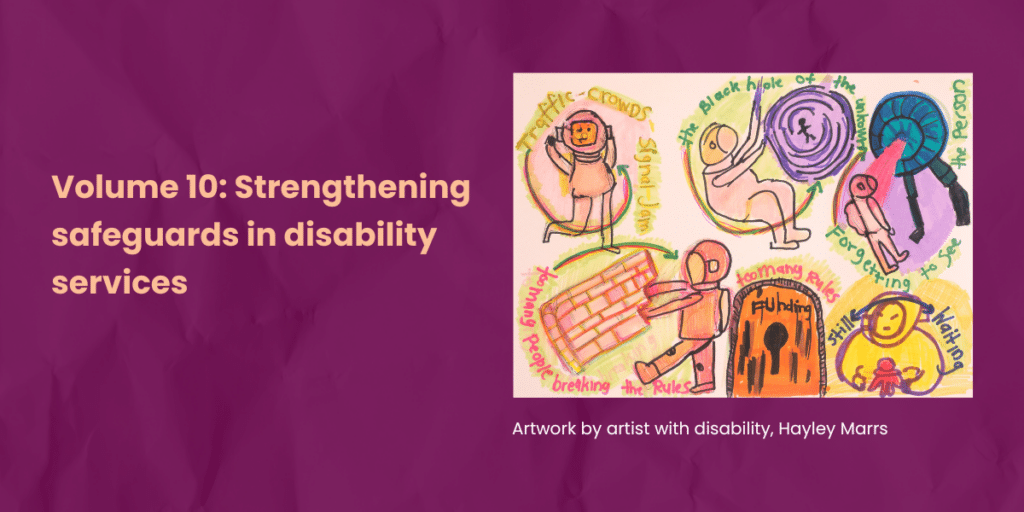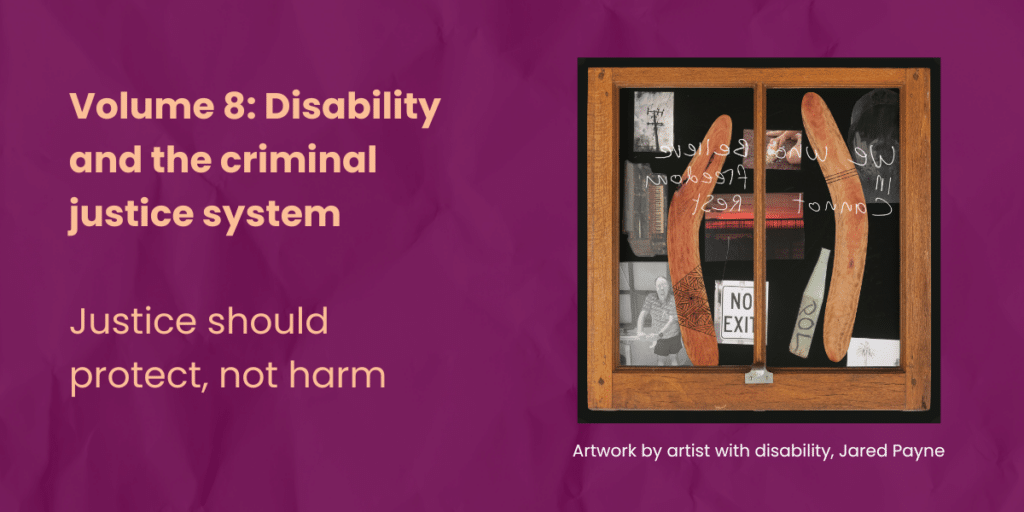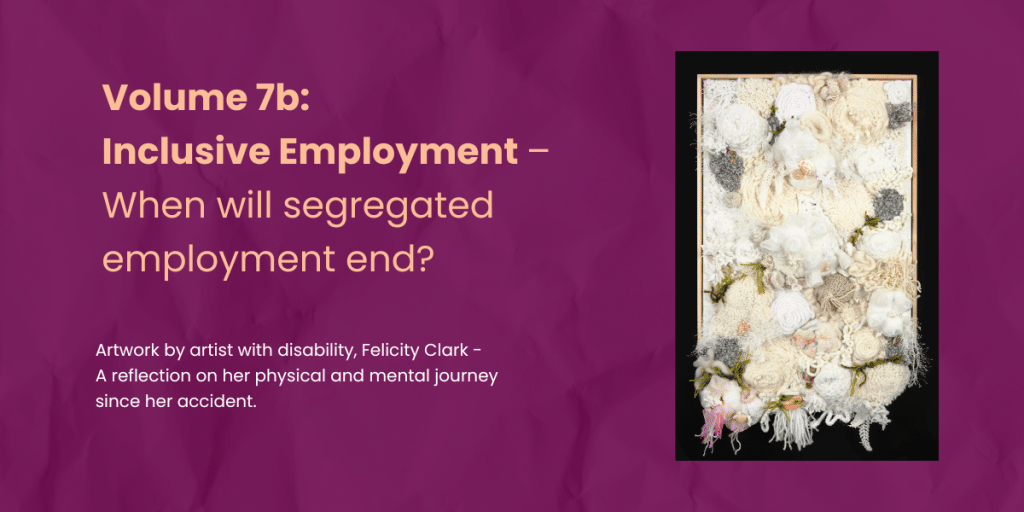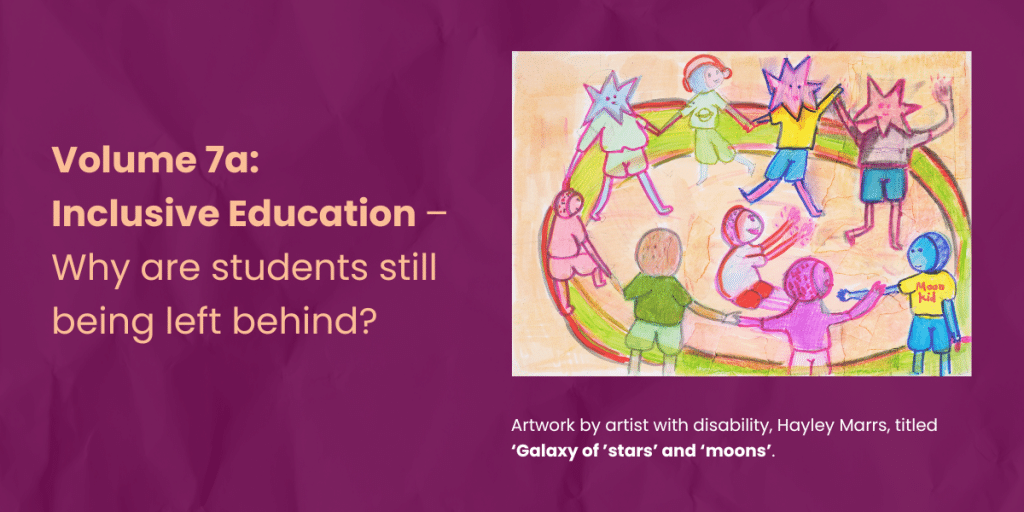
The Artwork
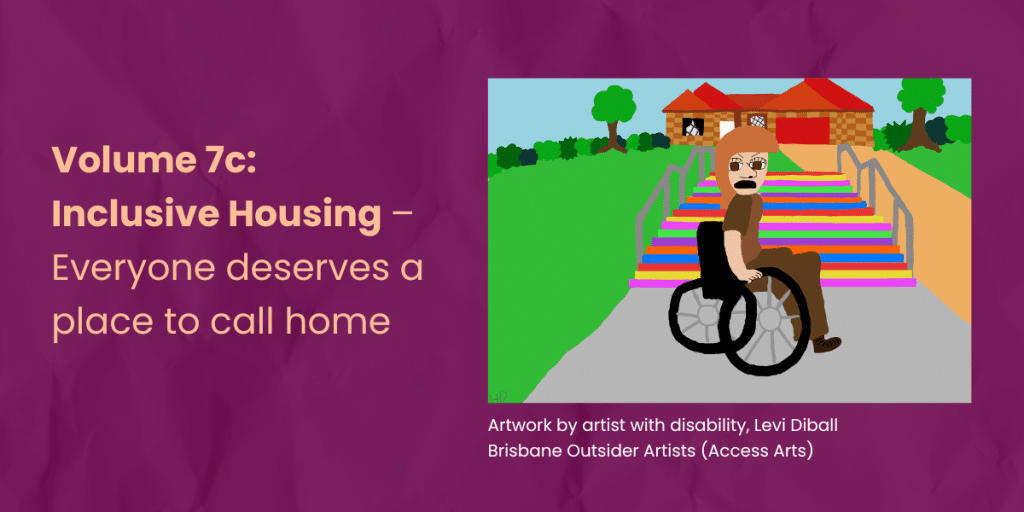
Levi Diball’s artwork draws on her own lived experience, using humour and creativity to tell stories about everyday life, family and disability. Through her work, she hopes to build greater understanding of the experiences of people with disability.
Created for our exploration of Volume 7c on Inclusive Housing, this illustration reminds us that home is more than a place to live.
Inclusive Housing
Housing is more than having a roof over your head. It provides safety, stability, independence and the opportunity to participate fully in community life.
In the final part of Volume 7, the Disability Royal Commission (DRC) examined the barriers people with disability face in accessing safe, secure and inclusive housing. While Australia’s housing crisis affects many people, people with disability often experience additional challenges, including limited access to accessible housing, a lack of suitable homes close to essential services, and discrimination within the housing system.
To address these issues, the DRC recommended that governments:
- Prioritise people with disability experiencing housing insecurity and homelessness in national housing strategies and policies.
- Increase the supply of accessible and adaptable housing.
- Strengthen tenancy rights and protections for people with disability, while improving oversight of disability accommodation.
- Reform group homes and support a transition away from segregated housing.
What QIDAN found
Compared with other DRC volumes, implementation of the housing recommendations has been mixed. While governments have made progress in some policy areas, many of the reforms that would directly improve people’s housing experiences have yet to occur.
Progress in policy and planning
Governments have started prioritising people with disability experiencing housing insecurity and homelessness in key national housing strategies, with one related recommendation now implemented. It appears that governments are starting to make a change on paper.
Tenants remain vulnerable
QIDAN found no evidence that governments have acted on Recommendation 7.37, which calls for stronger tenancy protections and occupancy rights for people with disability. Without these reforms, many tenants remain vulnerable to housing insecurity and discrimination.
Better oversight is beginning
Recommendation 7.38 calls for improved standards, monitoring and oversight of supported residential services. The Queensland Government has committed additional funding towards strengthening regulatory oversight of disability accommodation. This is a positive step, but further action is still needed.
Limited progress towards inclusive housing
The DRC calls for significant reform of group homes (rec 7.41) and a long-term transition away from segregated housing (recs 7.43 and 7.44). While inquiries into group homes have taken place, QIDAN found little evidence of broader action to implement these recommendations or expand more inclusive housing options.
Where things stand overall
According to QIDAN’s analysis:
- 33% of recommendations (4) have no implementation updates
- 42% (5) are beginning to be implemented
- 8% (1) are in progress
- 8% (1) have been implemented
- 8% (1) have been rejected
While governments are beginning to strengthen housing policies, much more work is still left to ensure people with disability have access to safe, secure and inclusive housing, with the same opportunities to choose where and how they live.
Help us track progress
Donations support the development of an accessible, independent DRC Tracker and our ongoing monitoring of the implementation of the Disability Royal Commission’s recommendations.
Support The DRC Still Matters Campaign
Here are some other ways you can support the campaign.
Read our detailed analysis of Volume 7c in this mini report:
 View PDF (405 KB)
 View Word (517 KB)