Artist Statement
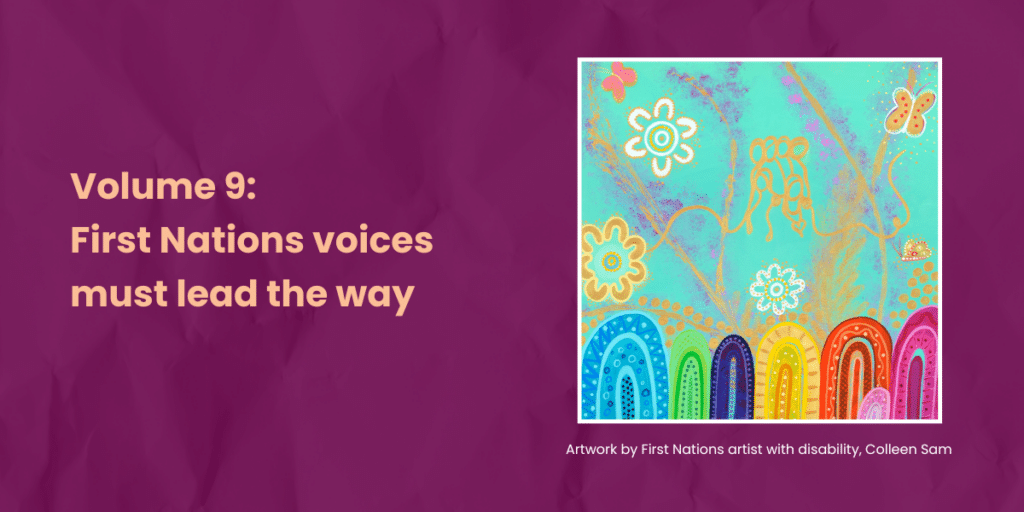
Spirit of Justice
The bright vibrant colours depicted in the artwork represents the bright and hopeful future for anyone experiencing massive changes in their lives, be it the individual’s personal experiences or their loved ones and people that are close to them and their community. The Mountains at the bottom of the painting represents the trials, obstacles and barriers one must overcome. The butterflies depict hope, faith, spirit and always looking for the beauty in life whilst connection to the spiritual realm is always present. The people in the middle painted by a golden thread connecting them illustrates togetherness, love and respect. It also means leaving your own personal signature on the people you meet from family to friends to the wider community, so let your signature be of high moral values and signed with a gold standard set of principles.
More than accessibility
Volume 9 of the Disability Royal Commission (DRC) focuses on the experiences of First Nations people with disability and the unique forms of discrimination, marginalisation and systemic barriers they continue to face.
The DRC recognised that improving outcomes requires more than making existing systems accessible. It called for governments to work in genuine partnership with First Nations people with disability, strengthen culturally safe services, and ensure First Nations leadership is embedded in decisions that affect their communities.
Among its recommendations, the DRC called on governments to:
- Improve the cultural safety and accessibility of child protection parenting assessments and disability screening for First Nations children.
- Increase access to culturally safe NDIS supports and services, particularly in remote and discrete communities.
- Ensure First Nations NDIS participants receive funding to participate in cultural life and maintain connections to Country, family and community.
- Establish a First Nations Disability Forum to provide national leadership.
- Enable the Forum to guide implementation and oversight of key reforms affecting First Nations people with disability.
What QIDAN found
Progress towards more culturally responsive systems
Governments have begun implementing recommendations to improve the cultural safety and responsiveness of the child protection, criminal justice and NDIS systems. Recommendations 9.2, 9.3, 9.7 and 9.8 are all in the early stages of implementation, signaling positive intent. It will be important to monitor how these reforms translate into improved experiences and outcomes for First Nations people with disability.
Some improvements for remote communities
QIDAN found early progress in recommendations aimed at improving access to NDIS supports in remote and discrete communities. However, Recommendation 9.5, which calls for greater investment in Aboriginal Community Controlled Organisations through block funding arrangements, has not progressed.
Leadership reforms remain delayed
Recommendation 9.10 calls for the establishment of a First Nations Disability Forum to provide national leadership and oversight. While consultations were undertaken between 2024 and 2025, no public outcomes have been released.
Without establishing the Forum, several other recommendations that rely on First Nations leadership—including Recommendations 9.11 to 9.13—cannot meaningfully progress.
Where things stand overall
According to QIDAN’s analysis:
- 38% (5) of recommendations have no implementation updates.
- 46% (6) are in the early stages of implementation.
- 8% (1) are in progress.
- 8% (1) have been implemented.
The Disability Royal Commission recognised that lasting change depends on genuine partnership with First Nations people with disability. While governments have begun implementing reforms to improve cultural safety and access, stronger First Nations leadership and continued accountability will be essential to achieving the Commission’s vision.
Help us track progress
Donations support the development of an accessible, independent online DRC Tracker and our ongoing monitoring of the implementation of the Disability Royal Commission’s recommendations.
Support The DRC Still Matters Campaign
Here are some other ways you can support the campaign.
Read our detailed analysis of Volume 9 in this mini report:
 View PDF (490 KB)
 View Word (2 MB)